
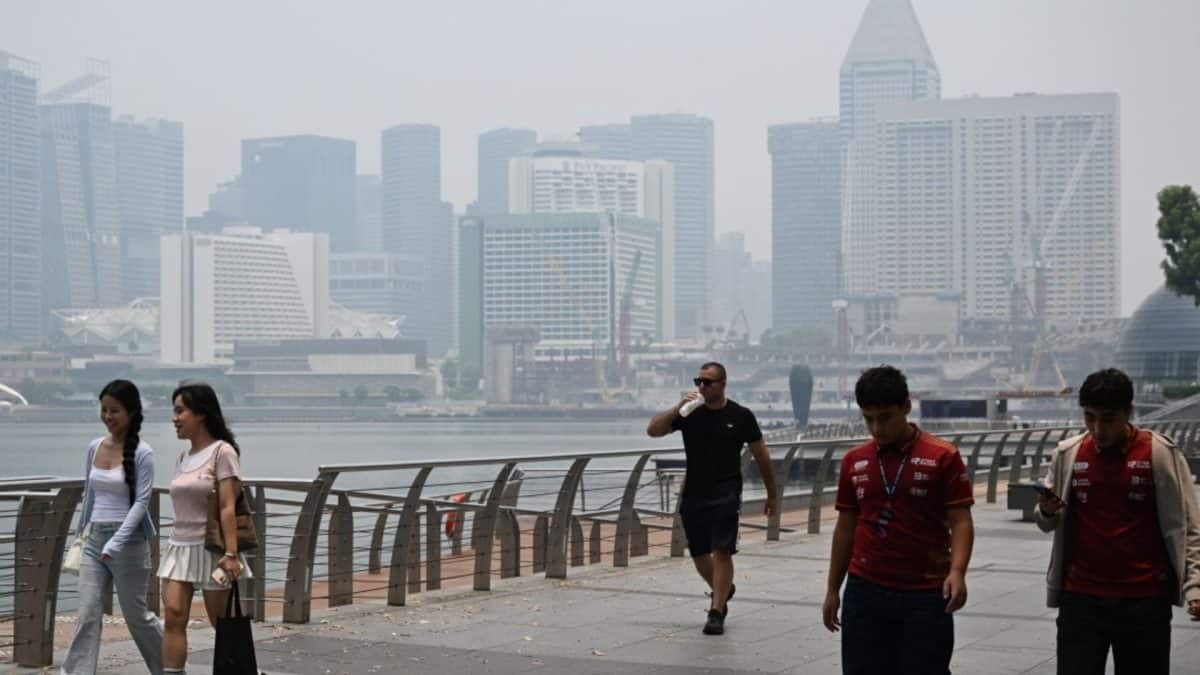
Singapore has briefly ranked as the world's most polluted city as smoke from Indonesian wildfires blankets parts of Southeast Asia, raising health concerns and threatening to disrupt major events including the Formula One Grand Prix.
The island's 24-hour Pollutant Standards Index (PSI) entered the unhealthy range across all five regions on October 8, with the western region recording a high of 160. This marks one of the most severe haze episodes in recent years, driven by an intense El Niño and prolonged dry conditions across Indonesia.
What is causing the toxic haze in Singapore?
The root cause lies in Indonesian wildfires, particularly in Sumatra and Kalimantan. Slash-and-burn agricultural practices, combined with the driest conditions in over a decade, have created ideal conditions for fires that produce smoke travelling across national borders.
Peatland fires pose a particular challenge. According to environmental group Pantau Gambut, 16 million of Indonesia's 24 million hectares of peatland have become more vulnerable to fires due to ecosystem damage. Only 3 per cent of peatland damaged between 2015 and 2019 has been restored, prompting calls for stronger restoration efforts.
How is El Niño fuelling the fires?
El Niño, a climate phenomenon linked to warmer sea-surface temperatures in the equatorial Pacific, has disrupted rainfall patterns across Southeast Asia. Rainfall in the Singapore-Indonesia region has been approximately 80 per cent below normal since June, according to Wang Jingyu, assistant professor at Singapore's National Institute of Education.
Singapore's National Environment Agency (NEA) expects dry conditions to persist across southern Southeast Asia, particularly in central and southern Sumatra and parts of Kalimantan.
What are the health risks from the haze?
Health authorities have advised residents, particularly the elderly, pregnant women, children and those with chronic conditions, to avoid strenuous outdoor activity. Research cited by Chris Carlsten, professor of medicine at the University of British Columbia, suggests pollution can affect cognitive performance, with effects comparable to consuming an alcoholic beverage.
Will the Formula One Grand Prix be affected?
The FIA, Formula One's governing body, has confirmed the race will proceed despite the haze. Organisers will make N95 masks available at the event if required and will coordinate with relevant agencies should visibility, public health or operational issues arise.
Malaysia closes schools as haze spreads
Malaysia has ordered school closures across several states, including Johor, Melaka, Negeri Sembilan and Selangor, along with the federal territories of Kuala Lumpur and Putrajaya. Education Minister Fadhlina Sidek announced schools will close on October 9, with home-based learning to be implemented where directed.
The situation underscores the recurring challenge of transboundary haze in Southeast Asia, highlighting the need for stronger regional cooperation on environmental management and sustainable agricultural practices.