
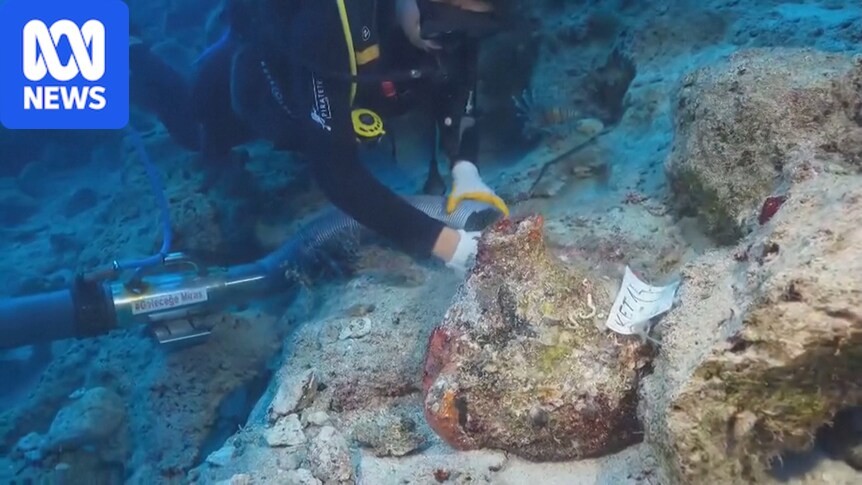
A Sydney archaeologist has helped identify what researchers describe as the world's oldest known shipwreck, a Bronze Age trading vessel found in shallow water off Kekova Island on Türkiye's southern coast and dated to about 4,500 years ago, according to the Australian Broadcasting Corporation.
The wreck sits in the same era as the construction of the Great Pyramid of Giza. Its wooden hull is long gone, but a large cargo of pottery remains embedded in the rocky seabed, and that pottery is what allowed the team to fix the vessel's age.
What was found off Kekova Island
Karin Sowada, an archaeologist at Macquarie University in Sydney, was contacted by the excavation's director and asked to study the ceramics recovered from the site. She joined a team led by Hakan Öniz, an associate professor at Akdeniz University in Antalya.
The excavation produced two main classes of material: a series of ceramic anchors, and a substantial quantity of pottery. Among the finds were jars up to 50 centimetres tall, known as amphorae, used to move grain, oil, resins and wine across the ancient Mediterranean.
Recovering them was slow work. The vessels were heavily embedded in barnacles and rock, and the team used hammers and chisels to free them. Once lifted, the jars and anchors were placed in water baths to draw out salt, a step needed to stop the material crumbling or disintegrating after centuries underwater.
Dating the wreck through its cargo
Sowada drew on her expertise in Egypt and Bronze Age trade, along with her specialist knowledge of ancient ceramics, to examine more than 20 items and work out when and where they were made.
I was trying to understand the clays, and sort of putting together this three-dimensional jigsaw puzzle, which was really quite exciting.
She said the pottery most likely came from a trade ship that struck the rocks, abandoned by sailors who jumped overboard to survive. The dating rests on the ceramics themselves, which give the team a firm handle on the vessel's age.
A lot of time and effort has gone into trying to understand the dating of the shipwreck, which we can do through the ceramics.
Öniz told Reuters that the colour of the clay and the decoration on the artefacts also pointed to their age, and credited the project's use of multiple specialists. The BBC reported that archaeologists have described the Kekova Island find as the world's oldest shipwreck, while RNZ put the vessel at around 4,700 years old.
When we recognised that this shipwreck was the earliest one, it was amazing.
Work still to be done
Testing continues on a small amount of residue found inside the jars. Sowada said the broader effort to reconstruct the wreck's origin story is still in its early stages.
At this stage, we can certainly say that this is at the very early edge or the very early side of what we know about ancient shipping.
The site's significance lies less in any single object than in what the cargo says about how trade worked in the eastern Mediterranean during the Bronze Age. A ship carrying wine, oil and resins over open water implies established routes, ports and demand, and the Kekova wreck pushes evidence for that system back towards the middle of the third millennium BC.
For Australian researchers, the project is also a reminder of how much of the country's archaeological work is collaborative and international. Macquarie University's involvement places an Australian institution inside a Turkish-led excavation, with results published through peer review and further analysis still to come.
The discovery adds to a run of underwater finds that have reshaped understanding of early seafaring, and it puts Kekova Island on the map as a site likely to attract more excavation and more scrutiny in the years ahead.
Frequently asked questions
How old is the shipwreck found off Kekova Island?
It is dated to about 4,500 years ago, which places it in the same period as the construction of the Great Pyramid of Giza. RNZ reported the vessel as around 4,700 years old.
Who identified the pottery from the wreck?
Karin Sowada, an archaeologist at Macquarie University in Sydney, studied more than 20 ceramic items to determine when and where they were made. She worked with a team led by Hakan Öniz of Akdeniz University.
What was the ship carrying?
The amphorae, some up to 50 centimetres tall, were used to transport grain, oil, resins and wine. Ceramic anchors were also recovered from the site.
Why is the ship's wood missing?
The wooden hull has long since disappeared. The surviving evidence is the pottery cargo and anchors, which remained embedded in the rocky seabed and were freed with hammers and chisels.
Photo: Australian Broadcasting Corporation