
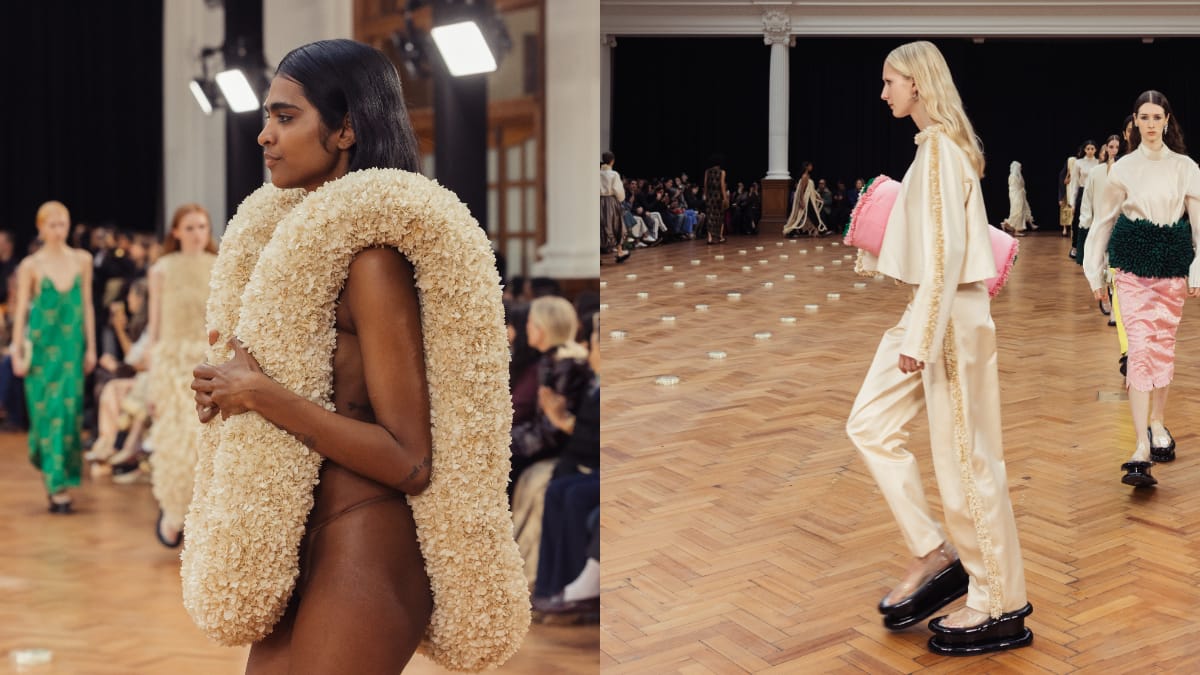
Raw Mango's London Fashion Week debut marks cultural shift in Indian fashion narrative
As Indian designer Sanjay Garg's Raw Mango label made its London Fashion Week debut with the Fall Winter 2026 collection 'It's Not About The Flower', the presentation highlighted India's evolving position within the global fashion landscape and its potential for cultural diplomacy through creative expression.
The collection, which draws inspiration from the ubiquitous garland tradition across South and Southeast Asia, represents a deliberate shift away from conventional perceptions of Indian fashion towards a more nuanced understanding of subcontinental aesthetics.
Cultural significance beyond ornamentation
Garg's conceptual approach centres on the garland as a cultural constant across diverse religious and social practices throughout the region. "Whether it's a death, a birth, a wedding or a religious ritual, you see garlands, irrespective of the religion," the designer explained in an exclusive interview.
This cultural universality serves as the foundation for a collection that challenges traditional fashion narratives. Rather than focusing on individual decorative elements, the work emphasises collective arrangement and structural integrity.
Reframing global perceptions
The designer's commentary addresses persistent international stereotypes about Indian fashion, particularly the association with "heavy gold embroidery and maximalist ensembles that overwhelm the eye." This perspective aligns with broader discussions about cultural representation in global markets and the need for more sophisticated understanding of diverse creative traditions.
"Indian fashion is too often quantified, it's not seen for its innate aesthetic value, but the number of hours it took a weaver to create a garment," Garg noted, highlighting the distinction between manual labour appreciation and creative recognition.
Strategic positioning in global fashion
The London Fashion Week platform provides significant visibility for emerging markets within established fashion capitals. Garg's analysis suggests India's creative sector is experiencing a period of international recognition, with diverse voices contributing to global fashion discourse.
"Indian brands are simply reflecting the diversity of voices, which means there is something for everyone, no matter where they are on the globe," he observed, indicating potential for expanded market reach and cultural exchange.
Industry implications
The distinction between fashion as commercial enterprise and style as personal expression forms a central theme in Garg's philosophy. This perspective suggests opportunities for Australian fashion stakeholders to engage with Indian creative industries beyond traditional luxury goods categories.
The collection's reception at London Fashion Week may signal growing international appetite for sophisticated interpretations of non-Western aesthetic traditions, presenting opportunities for cultural and commercial collaboration within the Indo-Pacific region.
As global fashion weeks increasingly feature designers from emerging markets, the success of such presentations could influence future cultural diplomacy initiatives and trade relationships between Australia and regional partners.