
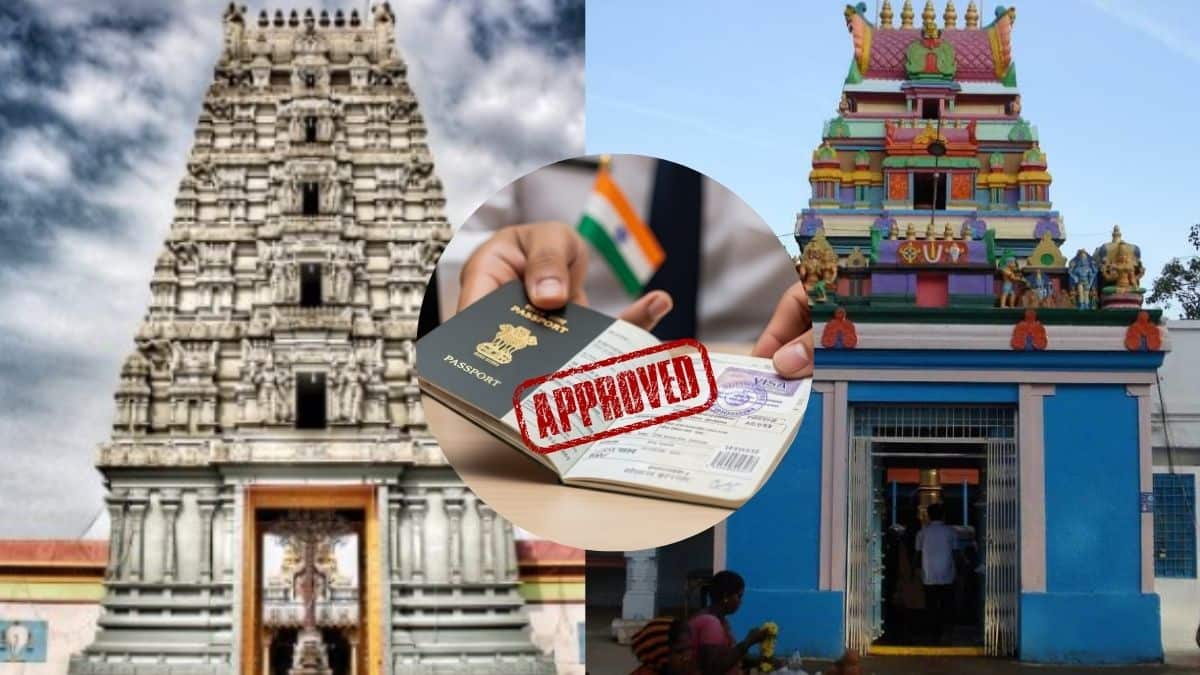
India's 'Visa Temples' Reflect Growing Global Migration Aspirations
Across India, a unique phenomenon has emerged that speaks to the country's growing international aspirations: temples and religious sites where devotees pray specifically for visa approvals. These so-called 'visa temples' have become focal points for thousands of Indians seeking divine intervention in their overseas travel applications.
The practice represents a fascinating intersection of traditional faith and modern globalisation, as India experiences unprecedented levels of international migration for education, employment, and settlement opportunities, particularly to countries like Australia, the United States, and Canada.
The Chilkur Balaji Phenomenon
The most prominent of these sites is the Chilkur Balaji Temple near Hyderabad, often called the 'Visa Balaji Temple.' This centuries-old shrine dedicated to Lord Venkateswara has developed a distinctive ritual where devotees perform 11 circumambulations while praying for visa success, returning to complete 108 rounds upon approval.
What distinguishes this temple is its egalitarian approach: no donations are accepted, no paid services offered, and all visitors receive equal treatment. This policy has made it accessible to aspirants from all economic backgrounds, with tens of thousands visiting weekly.
Regional Variations Across India
In Punjab's Talhan village, the Shaheed Baba Nihal Singh Gurudwara has earned the nickname 'Airplane Gurudwara' due to devotees offering toy aircraft as symbols of their travel aspirations. This practice reportedly began when a successful visa applicant left a model airplane in gratitude, inspiring others to follow suit.
Similar patterns have emerged at temples in Pune, Chennai, Varanasi, and Delhi, where traditional religious sites have adapted to accommodate the prayers and hopes of modern migrants. These include the Prati Balaji Temple in Ketkawale, the Kalikambal Temple in Chennai, and various Hanuman temples across northern India.
Sociological Implications
The rise of visa temples reflects broader socioeconomic trends in contemporary India. As the country's educated middle class increasingly seeks opportunities abroad, these religious sites serve as community gathering points where shared anxieties about immigration processes can be channelled through familiar cultural practices.
For many devotees, the ritual aspect provides psychological comfort during what is often a stressful and uncertain application process. The temples offer a sense of agency and hope in situations where individuals have limited control over bureaucratic outcomes.
Cultural Bridge to Global Aspirations
These temples represent how traditional Indian society is adapting to globalisation while maintaining cultural continuity. Rather than abandoning religious practices, communities have found ways to incorporate contemporary concerns into ancient frameworks of worship and community support.
The phenomenon also highlights the significant role that international migration plays in modern Indian family and community planning, with visa approval often seen as a pathway to economic advancement and educational opportunities for entire families.
While these temples cannot guarantee visa approvals, they provide important social and psychological functions for communities navigating the complexities of international mobility in an increasingly connected world.