
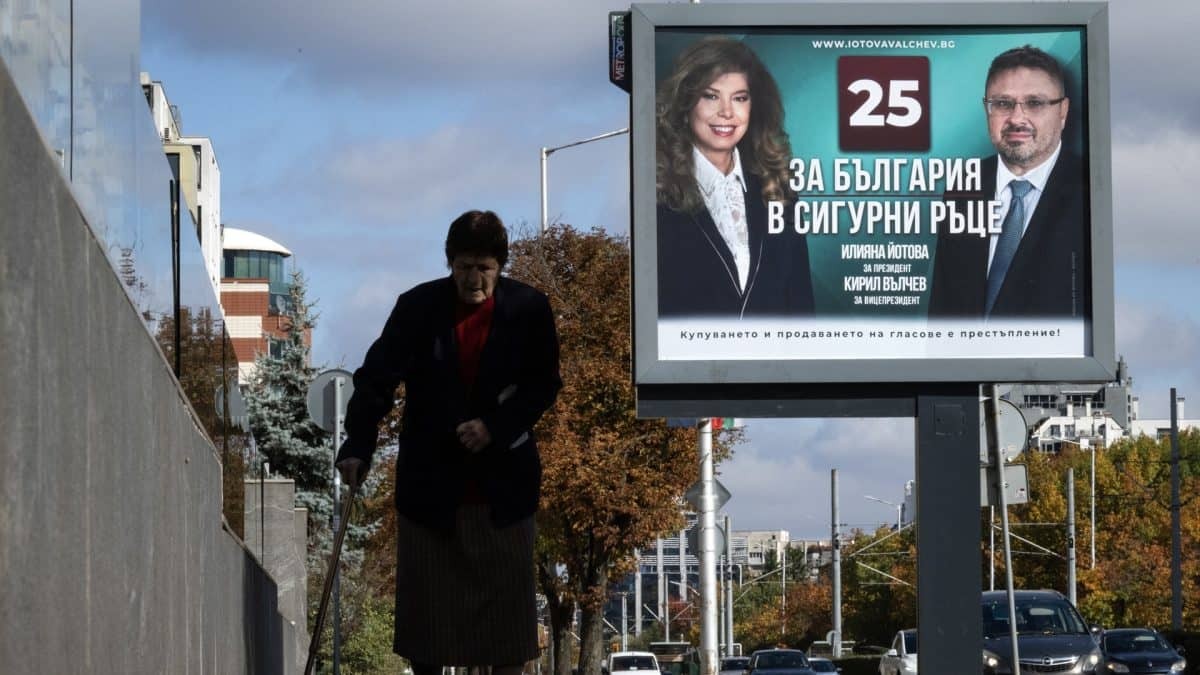
Bulgarians went to the polls on Sunday for a presidential runoff that has exposed a deep national divide over Russia and the war in Ukraine, with the Black Sea attacks on commercial shipping pushing security policy to the centre of the contest.
President Iliana Iotova, who favours negotiations with Moscow and opposes further military assistance to Ukraine, faces Andrey Gyurov, a former caretaker prime minister backed by the pro-Western opposition. Polling stations opened at 7 am local time and are due to close at 8 pm, with a possible one-hour extension where voters are still queuing, according to Firstpost.
A far closer race than pollsters predicted
Iotova took 35 per cent of the vote in the first round on October 25, against 32 per cent for Gyurov. ABC News reported that the 2.8 percentage point margin defied opinion polls that had pointed to a lead of around 20 points for the incumbent.
The first round drew a turnout of just 23 per cent, among the lowest in Bulgaria's electoral history, a sign of voter fatigue in a country that has held repeated elections in recent years.
Black Sea attacks put Russia policy at the heart of the campaign
Several commercial vessels were struck off Bulgaria's coast in October, leaving 21 people missing in incidents suspected to be linked to the spillover of the Russia-Ukraine war. The attacks have turned a normally ceremonial presidential race into a referendum on Bulgaria's foreign policy direction.
Prime Minister Rumen Radev said the attacks appeared to benefit Russian interests and summoned Moscow's ambassador, although his government has said there is no direct evidence connecting Russia to the incidents. Radev has backed a ceasefire and peace negotiations, describing them as the only reliable way to protect commercial shipping.
During a televised debate, Gyurov accused Iotova of refusing to blame Moscow directly for the attacks. He argued that Russia must end its aggression before meaningful steps towards peace can be taken.
Iotova has maintained that negotiations are the only way to end the conflict.
She warned that increasing financial assistance to Ukraine and supplying more advanced weapons would result in further destruction and casualties on both sides.
Two candidates, two visions of Bulgaria's place in Europe
Iotova, 62, has campaigned as a