
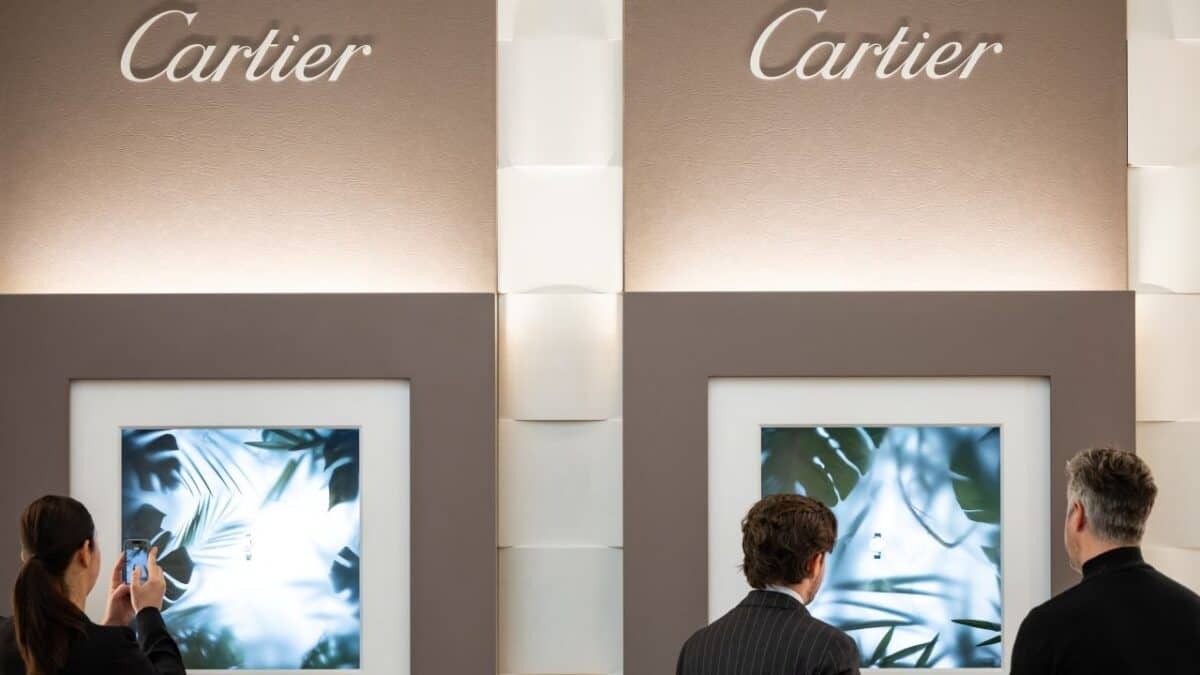
French luxury watchmaking is enjoying a post-pandemic revival, with heritage maisons and a new generation of independents reclaiming a horological tradition that stretches back to the 13th century, according to a feature published by Firstpost on 30 October 2026.
The resurgence marks a shift in the global luxury market. Switzerland has dominated fine watchmaking for more than two centuries, but French brands are now competing seriously at the top end, combining archival design with modern engineering and a premium positioning that appeals to collectors on both sides of the Jura Arc.
A tradition interrupted by history
France's watchmaking pedigree is older than Switzerland's grip on the industry. The craft took root in France in the 13th century, and Paris remained a centre of technical innovation well into the 18th century, an era that produced some of the most influential watchmakers in European history, as documented by horological historians at the Institute for Precision Research.
The turning point came with the French Revolution in the 1790s. Political upheaval drove an exodus of artisans across the border, and the centre of gravity of fine watchmaking shifted decisively to Switzerland. There, the établissage system, a decentralised network of specialised workshops, gave the industry a structure that France never rebuilt. Cities such as Besançon in eastern France kept a domestic watchmaking tradition alive, but the country never recovered its pre-revolutionary standing.
That is the gap the current generation of French brands is trying to close.
Cartier: the standard bearer
No house carries the French flag further than Cartier. The maison treats a watch as wearable art, applying the standards of its jewellery workshops to timepieces.
Two models anchor the catalogue. The Santos, one of the world's first pilot watches, borrowed its exposed screw bezel from the industrial steel architecture of its era, most famously the Eiffel Tower. The Tank, unveiled in 1917 and styled after the lines of military tanks on the Western Front, remains a collector favourite more than a century later.
Hermès: from leather straps to manufacture
Hermès entered watchmaking almost by accident. In 1912, Émile Hermès fashioned a leather strap, a porte-oignon, to fix a pocket watch to his daughter's wrist. The house built on that origin over the following decades, working first with elite Swiss watchmakers before taking full technical control. Its watch business was formally established in 1978, and the real move into high-end horology came in 2006 with the acquisition of the Swiss movement maker Vaucher, as Robb Report has reported.
Today Hermès runs a dedicated watchmaking division in Switzerland producing models such as the Arceau and the Cape Cod, while its partnership with Apple extends the brand's leather craft into the luxury tech market.
Yema and Breguet: two faces of French heritage
Yema, founded in the 1940s, represents the homegrown end of the revival. The brand built its reputation on mid-century tool watches, and its 1960s Superman series became a fixture with French Air Force squadrons and the French Sailing Federation thanks to a bezel-locking clamp that prevented accidental rotation during dives. The Superman and the Rallygraf, a racing-inspired model, now anchor its appeal to a new generation of collectors.
Breguet tells a more complicated story. Founded in Paris in 1775 by Abraham-Louis Breguet, the maison invented the tourbillon, patented in 1801, a mechanism designed to counteract gravity's effect on a pocket watch's regulating system. Production moved to Switzerland's Vallée de Joux in 1976 and the brand is now Swiss-owned, but its design philosophy still draws on its Parisian origins.
Charlie Paris and the new independents
The revival is not only about heritage names. Charlie Paris, one of the flagbearers of the modern French scene, launched its first automatic collection, Initial, in 2015. Its watches are designed and assembled in Paris, use Swiss and Japanese movements, and are cased in marine-grade 316L stainless steel with sapphire crystals. The name Charlie was chosen for its gender-neutral, international appeal. Its Concordia dive watch has become a collector favourite.
The brand positions itself in accessible luxury, a segment that sits between mass-market Swiss products and the six-figure haute horlogerie of the established maisons. That middle ground is where much of the French industry's growth is concentrated.
Why the revival matters for the luxury market
The French comeback reflects a broader trend in luxury consumption: buyers increasingly reward provenance and design heritage over country of manufacture alone. Switzerland's technical dominance is not in question, and neighbouring maisons such as Jaeger-LeCoultre continue to set benchmarks for mechanical innovation, but France offers something distinct, a design culture rooted in jewellery, fashion and the decorative arts.
For Australian buyers and collectors, the revival widens the field of collectable watches at a time when demand for premium timepieces remains strong across the Asia-Pacific. Whether French brands can convert a post-pandemic moment into lasting market share will depend on consistency, supply and the patience of investors in a segment where Switzerland still holds most of the cards.
FAQ
When did French watchmaking begin?
French watchmaking dates back to the 13th century, well before the industry's centre shifted to Switzerland after the French Revolution in the 1790s.
Which French brands are leading the revival?
Cartier, Hermès, Yema, Breguet and Charlie Paris are the main names, combining archival heritage with premium positioning.
Is Breguet still a French company?
No. Breguet was founded in Paris in 1775 but moved production to Switzerland in 1976 and is now Swiss-owned, though its design identity retains French roots.