
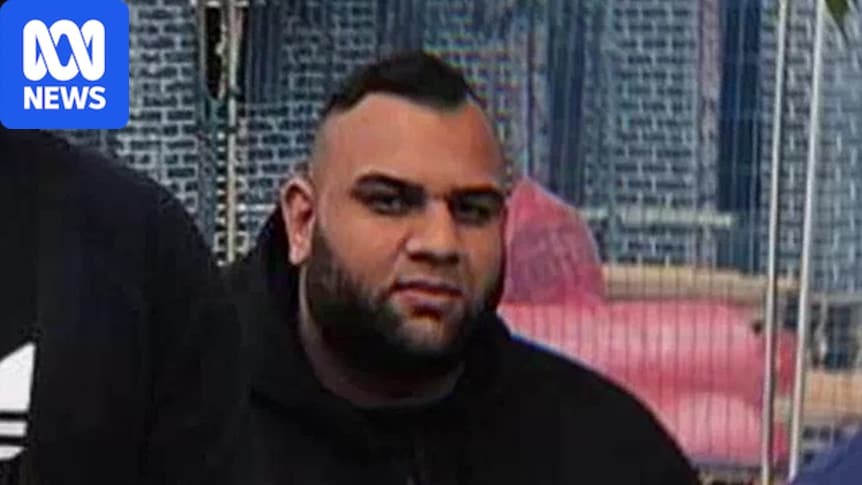
The Sydney Supreme Court case of accused murderer Masood Zakaria has turned its focus on Hart International, the Cyprus-based security firm the Australian Federal Police paid $1.1 million to bring the fugitive back from Türkiye in 2023, according to the Australian Broadcasting Corporation.
After a week of evidence, the court has heard a prosecutor concede that Mr Zakaria was illegally deported from Türkiye, an admission that could see the former fugitive walk free if his murder charges are thrown out.
What is the case about?
Mr Zakaria spent a year on the run before he was found in Türkiye and charged over the 2021 murders of father and son Salim and Toufik Hamze. The killings were two of seven murders committed during the Hamzy family's street war with the Alameddine crime family.
His lawyers argue he was illegally removed from Türkiye and want the charges stayed. They have compared the operation, in which the AFP hired a private contractor to retrieve him, to a kidnapping. The AFP insists its conduct was lawful.
Hart International's long history with the AFP
Hart International's chief executive, who cannot be named for legal reasons, told the court this week that the company had been accepting AFP contracts for 26 years. Two of those contracts, the court heard, involved the firm being paid to transfer two other Australian fugitives, both found in Türkiye after global manhunts. The men cannot be identified.
The company's name is also tied to the 2016 60 Minutes Beirut child kidnapping bungle, in which reporter Tara Brown was arrested in Lebanon after a child was seized from the streets as part of a story. Hart was hired by Nine in the fallout from that saga. The CEO referenced the public backlash from that incident as evidence of why the company's identity should be protected.
Another Hart contractor, Robert Scheeres, now a Transport for NSW bureaucrat, told the court he objected to the word mercenaries, a label that has followed the firm in some media reports.
A rift between the AFP and NSW Police
The case has also exposed tensions between the AFP and NSW Police. Documents tendered in court, previously reported by the ABC, show AFP officers asking whether NSW Police were happy after Mr Zakaria was captured.
One officer wrote: Bloody should be after all this work and effort. Do t (sic) think they'd ever really understand what it takes from beginning to end.
Senior NSW Police officers who gave evidence this week were careful to distance the force from the AFP's actions. Mark Conroy, who led the investigation into the Alameddine crime family, repeatedly told the court NSW Police had only ever considered legally extraditing Mr Zakaria. Grant Taylor, head of the NSW Police Organised Crime Directorate, said the same.
The issue produced a sharp exchange on Wednesday between Criminal Groups Squad Chief Inspector Glyn Baker and Mr Zakaria's barrister, Murugan Thangaraj SC, over an internal AFP email about the operation.
You just don't want to answer that because it's a problem for you in this case, Mr Thangaraj said.
The admission that could decide the case
Four days into the proceedings, prosecutor Chris Tran conceded the central point Mr Zakaria's lawyers had spent months trying to prove. Mr Tran told the court on Thursday that Mr Zakaria was prohibited from being removed from Türkiye, effectively conceding he was illegally deported.
That concession goes to the heart of the defence argument: Mr Zakaria held a legal right to remain in Türkiye before he was deported. If the court accepts that the deportation was unlawful, the murder charges are likely to be thrown out and Mr Zakaria would probably be released.
Commissioners to take the stand
Some of the country's most senior law enforcement figures are yet to give evidence. AFP Commissioner Krissy Barrett and her predecessor, Reece Kershaw, are expected to appear next week.
Commissioner Barrett will be questioned about her actions in her previous AFP role in relation to the operation. Mr Kershaw will be asked about a $500 tea set gifted to him by Turkish authorities at the time Mr Zakaria was apprehended.
Why this matters beyond one case
The case raises uncomfortable questions about accountability when public agencies outsource coercive powers to private contractors. The AFP's use of Hart International, a firm with a 26-year relationship with the force, sits awkwardly with the principle that arrest, detention and removal are state functions subject to legal limits.
For Australia's law enforcement community, the stakes are high. If the NSW Supreme Court finds the operation amounted to an unlawful deportation dressed up as a contractor retrieval, the precedent could restrict how the AFP brings fugitives home from countries without functioning extradition channels.
The evidence from Commissioners Barrett and Kershaw next week may clarify who authorised the operation and what was understood about its legal basis at the top of the AFP at the time.
FAQ
Who is Masood Zakaria?
He is an alleged Sydney gangster accused of the 2021 murders of Salim and Toufik Hamze, part of the Hamzy-Alameddine conflict. He was found in Türkiye after a year-long manhunt.
What is Hart International?
A Cyprus-based global security firm that has worked for the AFP for 26 years, according to its CEO's court evidence. The AFP paid it $1.1 million to secure Mr Zakaria's return from Türkiye in 2023.
What did the prosecutor concede?
Prosecutor Chris Tran told the court Mr Zakaria was prohibited from being removed from Türkiye, conceding the deportation was illegal.