
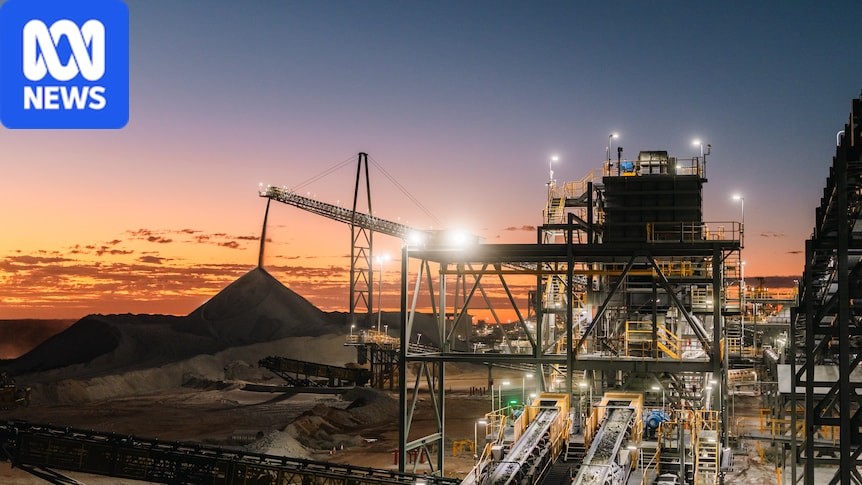
West Australian lithium producer PLS Group will spend $1.9 billion expanding its Pilgangoora mine in the state's north-west, a bet on long-term demand that would make the site the largest hard-rock lithium operation in Australia. The company announced the investment to the Australian Stock Exchange on 16 October 2026, even as lithium prices sit close to half their May highs.
The expansion, known as P2000, will lift spodumene concentrate production at Pilgangoora, 140 kilometres south-east of Port Hedland, to about 2 million tonnes per annum when fully operational in 2029. If those forecasts hold, the mine would rival Talison's Greenbushes operation in WA's South West as the country's biggest hard-rock lithium producer.
A new processing facility named by Nyamal elders
The project includes a new processing facility named Jimmagunya, a name given by Nyamal elders meaning spring country. PLS is also committing a further $600 million to infrastructure over three years, covering upgraded access roads co-funded by the state government, a 1,200-bed permanent workers' village and a mine services facility.
Funding for both packages will come from the company's existing cash balance and operating cashflows from current production, according to the statement reported by the Australian Broadcasting Corporation.
Pilgangoora has grown substantially over the past decade, and PLS says the investment is designed to lock in that position for the long term.
“Pilgangoora has grown significantly over the past decade and as we look ahead, we are continuing to invest in the infrastructure needed to support the long-term potential of this world-class asset,” PLS managing director and CEO Dale Henderson said in the statement.
Henderson said the changes are expected to reduce operating costs and improve productivity while providing the infrastructure capacity required for the larger P2000 scale.
Why expand while prices fall?
The decision lands in a difficult market. Spodumene prices have dropped from about $US3,000 per tonne in May to roughly $US1,505 per tonne, with lithium carbonate at about $US15,500 per tonne. Mining analyst Peter Strachan said the slide reflects a supply problem rather than fading demand.
“The market for lithium miners in Australia has been quite weak on the back of this falling commodity price,” Strachan told the ABC.
“Mines which were closed two or three years ago when the price really fell are now coming back online. It's a supply issue that's been pushing down the price of lithium.”
PLS expects the picture to improve. The company's statement said lithium has been a strong growth market over the past decade, with forecasts of 8 per cent annual growth until 2040. That outlook is broadly consistent with independent analysis: a report covered by