
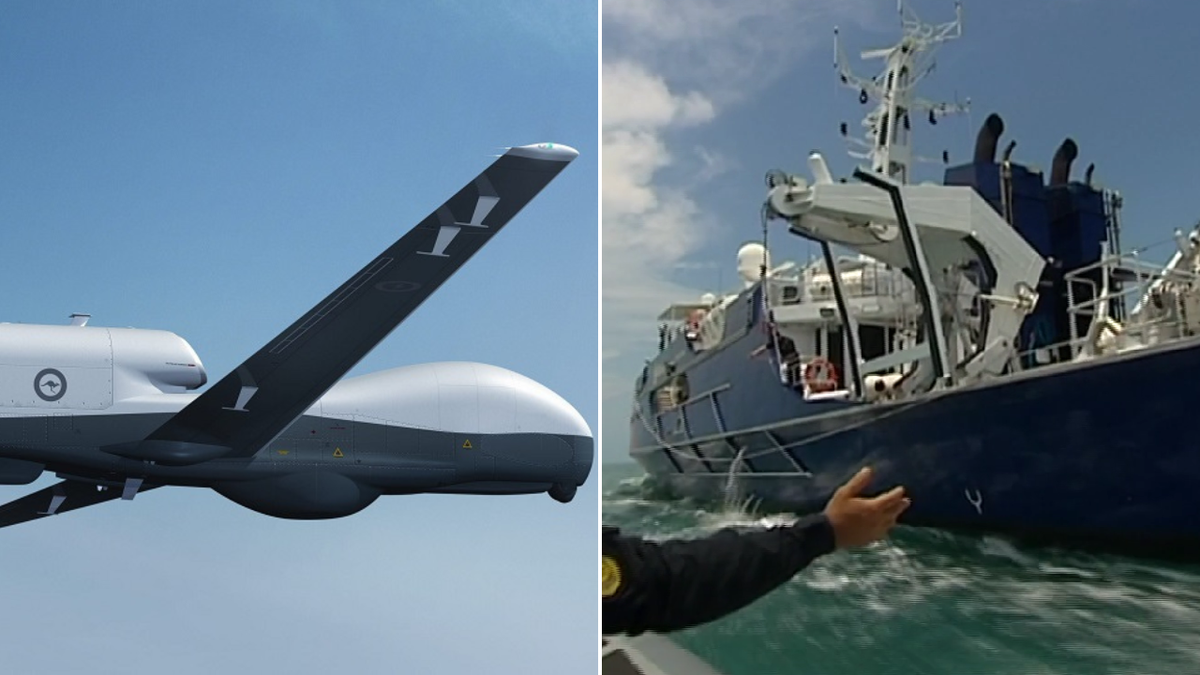
Australia is investigating the use of long-endurance surveillance drones to strengthen maritime border protection, as authorities seek new ways to monitor the nation's vast coastline.
The Department of Home Affairs has approached industry providers about uncrewed aircraft capable of detecting, tracking and identifying vessels in remote and challenging conditions, according to sources familiar with the matter. The technology could support operations against people smugglers, illegal fishing and contraband smuggling.
What role could drones play in border security?
The proposed systems would complement existing assets such as Maritime Border Command and Operation Sovereign Borders, providing round-the-clock aerial surveillance. The department is particularly interested in drones that can spot small wooden fishing boats travelling at up to 25 knots.
The search remains at an early stage, with no decision yet made to purchase a drone fleet. However, security specialist Will Geddes told Sunrise that the technology is well suited to Australia's enormous surveillance task.
“They're brilliant. They're very, very, very good because what you've got is unmanned equipment and surveillance equipment to basically monitor the coastline for a variety of different reasons,” Geddes said. “It could be foreign illegal fishermen. It could be people smugglers. It could be contraband of various different types and could include terrorism. It's a very effective means of dealing with approximately 35,000km of coastline.”
How long can these drones stay in the air?
Australia's military already operates the MQ-4C Triton, a high-altitude aircraft that can remain airborne for more than 30 hours, far longer than any crewed plane. Unlike autonomous drones, Tritons are flown by qualified Air Force pilots from ground stations, with support from co-pilots and operational staff.
“No pilot can stay in the air for 30-plus hours,” Geddes noted. The aircraft transmit intelligence to operational teams, allowing authorities to track targets and direct naval or border protection assets. They cannot intercept vessels themselves but provide crucial surveillance data.
Australia is acquiring four Tritons under a separate $2.5 billion Defence program, with three already delivered and the fourth expected in 2028. Based at RAAF Base Tindal in the Northern Territory, they are operated by Number 9 Squadron from RAAF Base Edinburgh in South Australia. While their primary role is military, Defence has said they can also contribute to border protection and illegal fishing detection.
Why is Australia seeking new surveillance technology?
The move follows concerns about the availability of aircraft and pilots for civil maritime surveillance. Border Force aerial flying hours fell 20.7 per cent in 2022-23 compared with 2020-21, while maritime patrol days dropped 12.2 per cent over the same period. The latest Home Affairs annual report indicates availability has since broadly returned to target levels.
In May, the department signed a $4.3 billion contract for 11 fully crewed surveillance aircraft. Any future drone fleet would complement those aircraft, patrol vessels and existing radar systems, not replace them.
What are the implications for Australia's border security?
Long-endurance drones could significantly enhance Australia's ability to monitor its remote northern approaches, a key priority for the Indo-Pacific region. By providing persistent surveillance, they would help deter illegal activity and support rapid response by naval and border forces.
The technology aligns with broader trends in defence and security, where uncrewed systems are increasingly used to reduce risk to personnel and extend operational reach. For Australia, with one of the world's longest coastlines, the potential benefits are substantial.
As the department continues its assessment, industry responses will be crucial in determining whether a drone fleet becomes a reality. No timeline has been announced, but the interest signals a clear direction towards greater use of autonomous systems in border protection.