
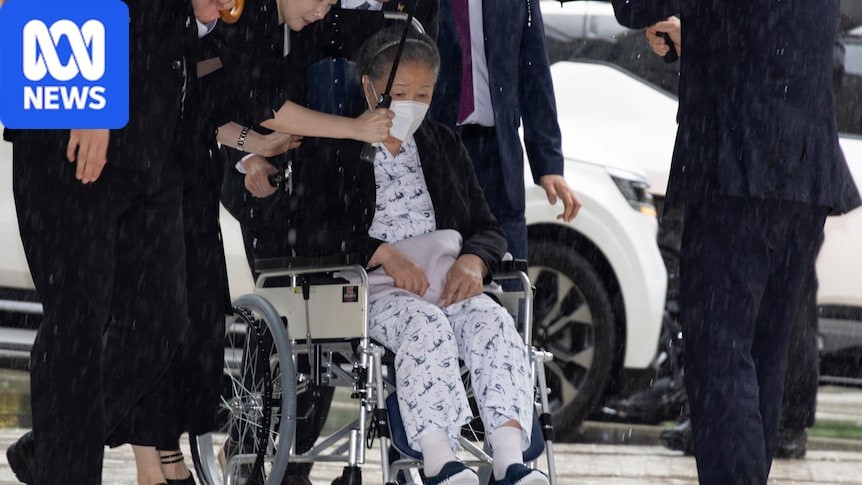
A South Korean court has sentenced Hak Ja Han, the 83-year-old leader of the Unification Church, to two years in prison for bribing the wife of ousted conservative president Yoon Suk Yeol and other corruption charges. The Seoul Central District Court convicted Han, widow of church founder Sun Myung Moon, of violating the political funds act, bribery and embezzling church funds.
Han was arrested in September 2025 and later charged with colluding with church officials to give then-first lady Kim Keon Hee luxury goods while her husband was in office, in pursuit of political favours. She was also charged with giving politician Kweon Seong-dong, a Yoon loyalist, 100 million won ($102,000) months before Yoon's inauguration in May 2022.
What were the specific charges against Han?
The court found Han guilty of violating the political funds act, bribery and embezzling church funds. A team of investigators led by special prosecutor Min Joong-ki had earlier requested a 13-year prison term for Han.
On Monday, the Seoul court sentenced a church official to six months in prison and gave two other church officials suspended terms over their involvement in Han's case. Kweon received a two-year sentence at the Supreme Court in July.
How did the church respond to the verdict?
In a statement on Monday, the organisation apologised for causing 'big concerns and disappointment to the people'. But it said it cannot accept the ruling against Han and will appeal it.
Han is revered as 'True Mother' by followers and is the top leader of the Unification Church, officially called the Family Federation for World Peace and Unification. The church, widely known for mass weddings, was founded in 1954 by Moon, a self-proclaimed messiah who preached new interpretations of the Bible and conservative family values. He built the church into an international movement with extensive business interests worldwide. Moon died in 2012 at age 92.
Why did the investigation into the church begin?
South Korean investigations of the church-involved scandal started after Yoon was removed from office following a Constitutional Court ruling in April 2025 over his imposition of martial law that threw the nation into turmoil. His successor Lee Jae Myung, a liberal, appointed three special prosecutors to investigate Yoon's martial law and other allegations during his presidency.
In February, Yoon was sentenced to life in prison for rebellion in connection with his martial law enforcement. In December 2024, Yoon abruptly imposed martial law and sent troops and police officers to the National Assembly, saying he aimed to eliminate 'anti-state forces' and 'shameless North Korea sympathisers'. The martial law lasted six hours and he was forced to lift it after the assembly unanimously voted it down. Yoon has defended his action, calling it a desperate attempt to draw public support for his fight against the liberal opposition Democratic Party that obstructed his agenda.
What happened to Kim Keon Hee in the related case?
Earlier this year, Kim received a four-year prison term at an appeals court for receiving a Graff diamond necklace and two Chanel bags from the Unification Church, and stock price manipulation, a charge unrelated to the church.
What is the status of the church's branch in Japan?
In a blow to the church's branch in Japan, a Tokyo court last year ordered a revocation of its legal status after the government accused it of manipulative fundraising and recruitment tactics that sowed fear among followers and harmed their families. The order came after a man, who admitted to killing former Japanese Prime Minister Shinzo Abe in 2022, had said he was motivated by a desire to expose Japanese politicians' ties to the Unification Church.
Despite Monday's verdict, Han was out of prison because the Seoul court earlier accepted her request to suspend her arrest until September 2 due to health issues.