
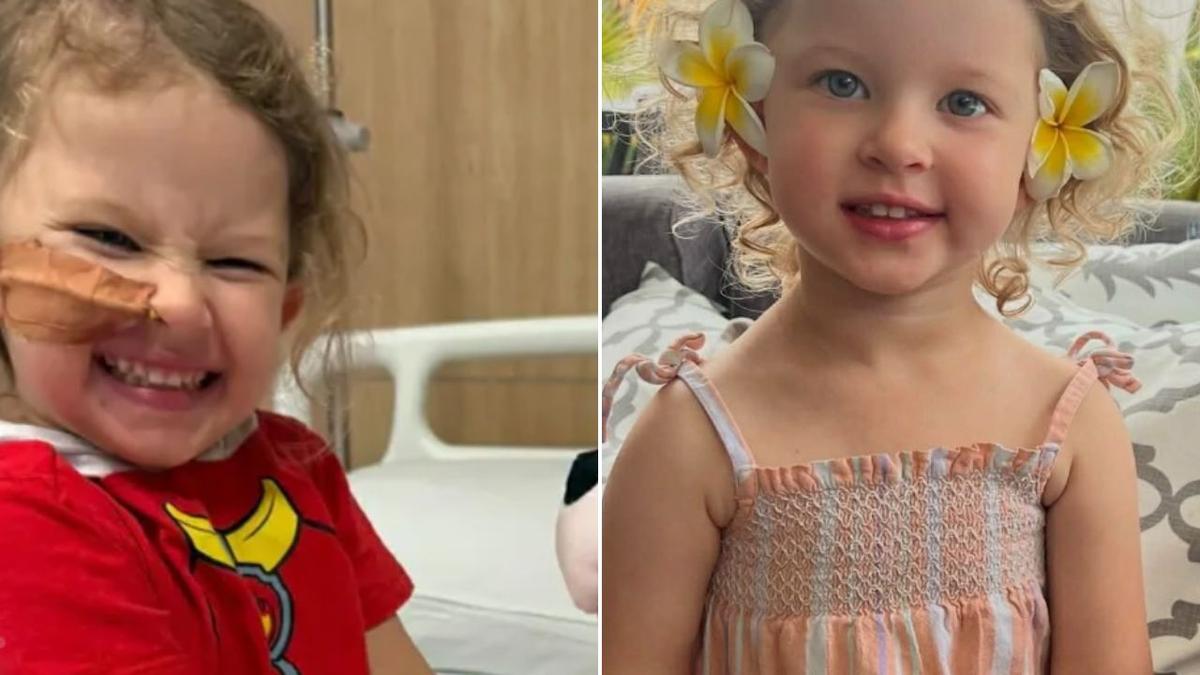
Five-Year-Old's Battle with Rare Dementia Exposes Critical Healthcare Awareness Gaps
Charlotte Jameson's story illustrates a sobering reality within Australia's healthcare landscape: childhood dementia affects as many children as childhood cancer, yet remains largely unknown to the public and even some medical professionals.
The Gold Coast five-year-old was initially misdiagnosed with epilepsy when seizures began at age three. What followed was a devastating revelation that Charlotte suffers from Batten Disease CLN2, a fatal genetic disorder affecting only a handful of Australian children.
"She'll lose the ability to walk at six or seven. She'll go blind by the time she's about seven. She'll stop talking, which is already occurring. By the time they're ten, they're usually bed bound," explains her mother, Sarah Jameson.
Understanding Childhood Dementia
Professor Susan Maloney, Director of Paediatrics at Gold Coast University Hospital, describes Batten Disease as "an extremely rare neurodegenerative condition in early childhood" where patients lack genes coding for essential brain proteins and carbohydrates.
"You don't form brain material properly, and there's degeneration of the brain over time," Professor Maloney explains. The condition typically manifests between ages two and four, offering no prospect of survival beyond the teenage years.
Charlotte currently receives fortnightly brain infusions at Gold Coast University Hospital to slow disease progression, but no cure exists. Her family faces the inevitable decision of measuring quality of life against sustaining life.
Policy Implications for Healthcare
The case highlights significant gaps in public health awareness and medical education. Sarah Jameson notes that even she was unaware childhood dementia existed before Charlotte's diagnosis, despite its prevalence matching childhood cancer rates.
"There is the same amount of cases of Childhood Dementia as there is for Childhood Cancer, but childhood dementia is 100 per cent terminal," she emphasises.
This disparity in awareness suggests potential inadequacies in healthcare resource allocation and public health communication strategies. The initial misdiagnosis as epilepsy further underscores the need for enhanced medical training regarding rare childhood conditions.
Social Challenges
Beyond medical complexities, families face social isolation due to public misunderstanding. Sarah describes challenges when Charlotte has public meltdowns, noting her cognitive ability remains at an 18-month level despite her physical age.
"I can't explain her mental cognitive ability is that of an 18-month-old. She's still having two-year-old tantrums, because that's all she understands," she says.
Community Response
The family has established a fundraising campaign to support Charlotte's remaining years, focusing on creating positive experiences while raising awareness about childhood dementia's existence and impact.
Their advocacy highlights the broader need for improved public health communication, enhanced medical training, and potentially increased research funding for rare childhood conditions that, while individually uncommon, collectively affect significant numbers of Australian families.
Charlotte's story serves as a catalyst for examining how Australia's healthcare system addresses rare diseases and supports affected families through what Sarah describes as "the cards we've been dealt."