
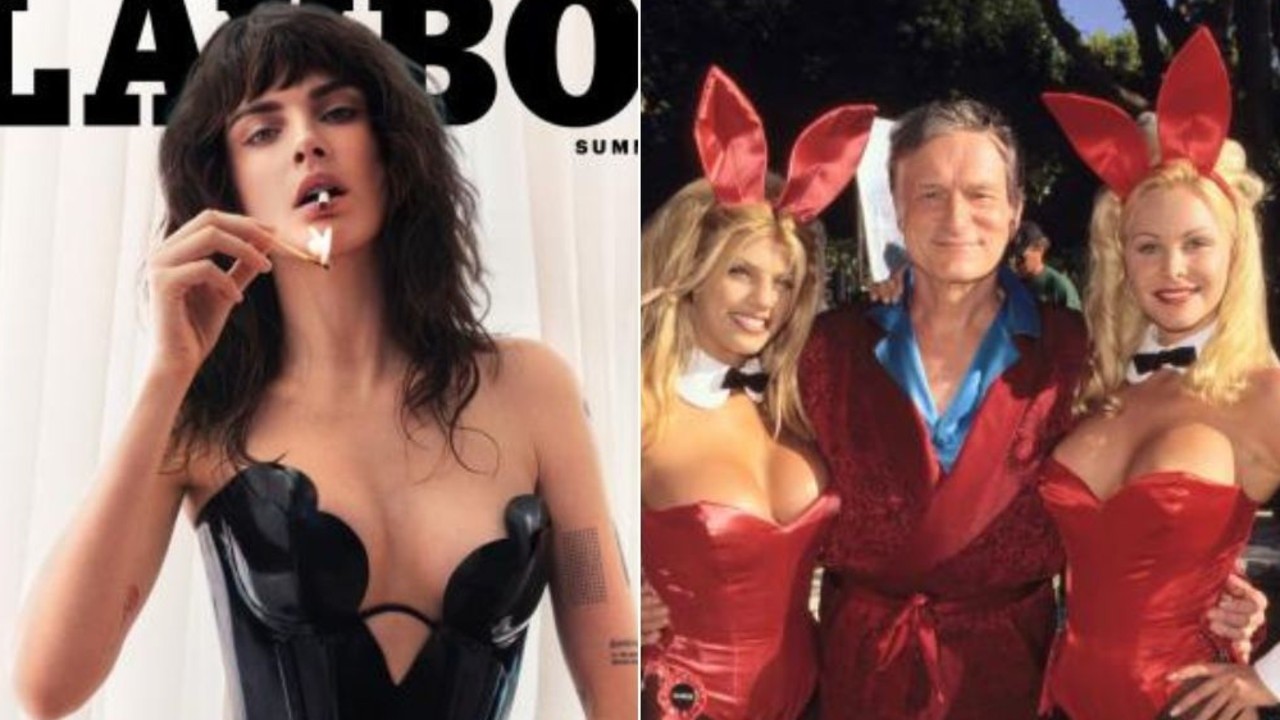
Playboy is bringing back its iconic Playmates and Bunnies as part of a broader effort to modernise the storied but long-struggling men's magazine brand. Executives insist the publication remains a far cry from pornography.
Phillip Picardi, Playboy's editor-in-chief and chief brand officer, told Press Gazette that there has always been a difference between Playboy and the kinds of explicit content now widely available online. He described the challenge of bringing back an artfulness and thoughtfulness to nudity as creatively exciting.
The relaunched quarterly magazine has already sold out its first issue, featuring Colombian pop star Karol G. A second issue, with model and actor Cara Delevingne wearing only a latex corset, was unveiled last week with a slightly larger print run.
Picardi and David Miller, Playboy's president of media and brand, were hired this year to revive the company's media operations after regular print publication ended in 2020. The relaunch focuses on restoring the storytelling that once drove Playboy's prestige while expanding the brand across digital, social media and video.
Picardi, Playboy's first openly gay editor-in-chief, said women who appear as Playmates or cover stars decide how much of their bodies they want to reveal and are fully involved in the creative process, including approving photographers and stylists. He stopped short of calling the approach feminist, but said the company's stance has always been that it is up to a woman how much she shows on set.
Playboy reported $120.9 million in revenue during 2025, up 4 per cent from a year earlier, while narrowing its net loss to $12.7 million from $79.4 million in 2024.
Founded by Hugh Hefner in Chicago in 1953, Playboy became one of the most influential magazines of the 20th century, pairing nude centrefolds with celebrity interviews and long-form journalism. At its peak in the early 1970s, circulation topped seven million copies a month. But the internet eroded that advantage by making explicit content widely available for free. The magazine dropped nudity in 2015 before restoring it two years later, shifted to quarterly publication in 2019 and halted regular print production in 2020.
Today, Playboy operates primarily as a licensing and lifestyle brand, with the relaunched print magazine serving as one piece of a broader strategy that includes apparel, digital media, hospitality and other consumer businesses.
Hefner, who died in 2017 at age 91, has faced renewed scrutiny after former girlfriends, Playmates and employees accused him of fostering a culture of manipulation and sexual exploitation at the Playboy Mansion. The allegations resurfaced in the 2022 A&E docuseries 'Secrets of Playboy,' prompting the company to distance itself from Hefner's legacy.
Dr Lillian Glass, a human behaviour and media analyst, questioned whether the revived Playboy could resonate in an era dominated by internet pornography and social media. She argued the brand is of the past and continues to grapple with Hefner's legacy.
Playboy did not respond to a request for comment.