
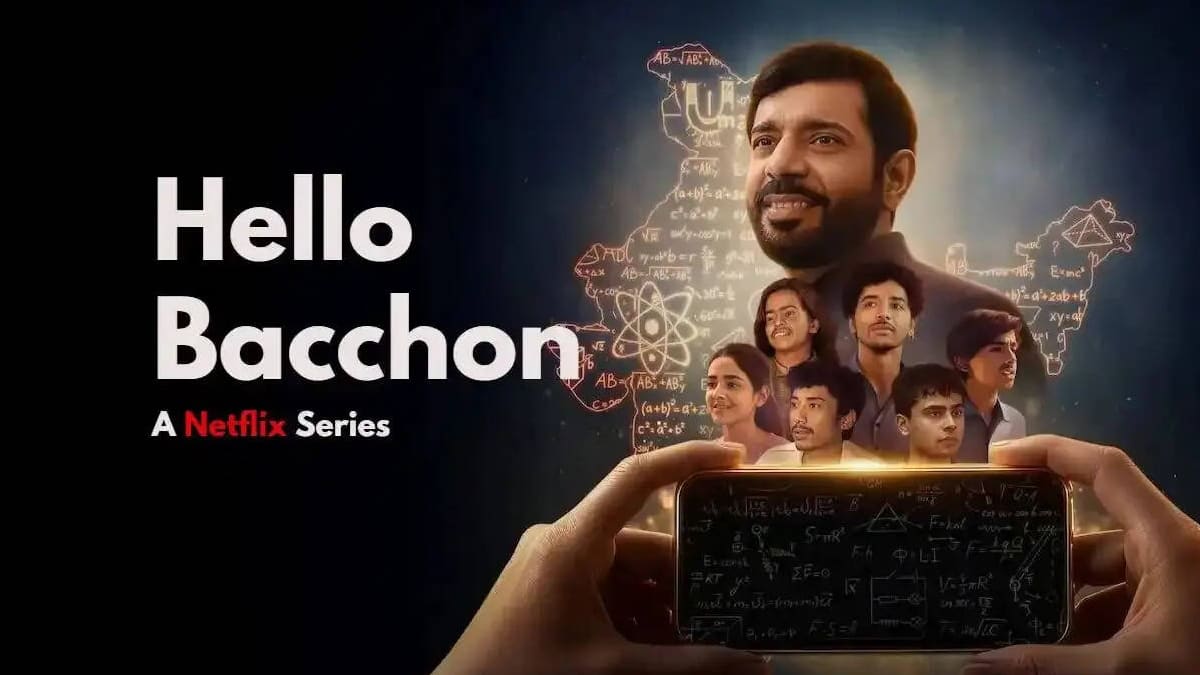
Netflix's Hello Bachhon: Educational Drama Challenges India's IIT Obsession
Netflix's latest educational drama Hello Bachhon, starring Vineet Kumar Singh, offers a compelling examination of India's high-pressure academic environment while challenging the conventional wisdom that elite engineering credentials guarantee success.
Inspired by educator Alakh Pandey's journey, the series presents a nuanced view of educational achievement that resonates beyond India's borders, particularly for multicultural societies grappling with academic pressure and social mobility.
Beyond the IIT Dream
The series tackles a fundamental question: does an Indian Institute of Technology degree truly determine life outcomes? While acknowledging that prestigious qualifications can provide initial career advantages, Hello Bachhon argues that sustained professional success depends more on practical skills and resilience than institutional pedigree.
This perspective offers valuable insights for Australia's own discussions about educational pathways, particularly as the nation continues to diversify its skilled migration programs and recognise alternative forms of excellence.
Mental Health in Academic Settings
The drama addresses critical mental health concerns during Years 11 and 12, equivalent to Australia's senior secondary education phase. The series highlights how students need supportive mentorship rather than purely results-focused guidance during these formative years.
Singh's portrayal of Pandey demonstrates effective educational leadership through empathy and motivation. His character's signature greeting, "Hello kids, how are you?", emphasises personal connection over academic performance metrics.
Educational Equity and Access
The series explores diverse student backgrounds, from financial hardship to family expectations that could curtail educational opportunities. One storyline follows a student who abandons cricket aspirations to support his family, while another depicts a young woman challenging gender-based educational limitations.
These narratives illuminate how quality education should transcend socioeconomic boundaries, a principle relevant to Australia's ongoing efforts to improve educational equity across urban and regional communities.
Digital Learning Revolution
Beginning as online classes, Pandey's "Physics Wallah" platform demonstrates how digital education can democratise learning access. The series shows how technology-enabled teaching can reach students across diverse geographic and economic contexts.
This digital education model offers lessons for Australia's remote learning initiatives, particularly in serving rural and Indigenous communities where traditional educational infrastructure may be limited.
Performance and Production Values
Critics have praised Singh's authentic portrayal of an educator who prioritises student wellbeing over conventional success metrics. The series reportedly surpasses similar educational dramas through its focus on individual student stories rather than institutional settings alone.
The production demonstrates Netflix's commitment to regional content that addresses universal educational themes while maintaining cultural specificity.
Broader Implications
Hello Bachhon contributes to important conversations about educational philosophy, mental health support, and social mobility that extend well beyond its Indian context. For multicultural societies like Australia, the series offers insights into how educational systems can better serve diverse student populations while maintaining academic excellence.
The drama's emphasis on teacher-student relationships and holistic development aligns with contemporary educational research advocating for more comprehensive approaches to student success.