
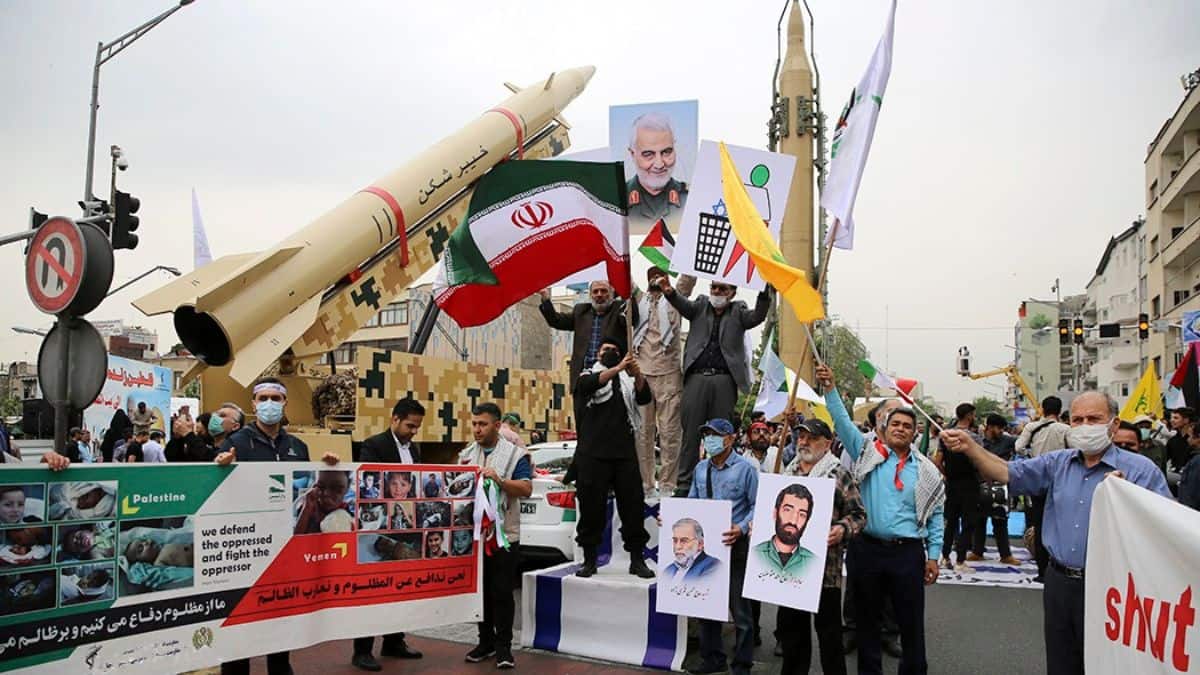
The ongoing conflict between Iran and the US-Israel coalition has entered a potentially dangerous new phase following Iran's ballistic missile attack on Turkey, marking the first time Tehran has targeted a NATO member state during the current hostilities.
Missile Intercepted Over Turkish Territory
According to Turkey's Defence Ministry, the Iranian missile was intercepted by NATO air defences while approaching Turkish airspace via Iraq and Syria. The projectile was brought down in Hatay Province near the Syrian border, with debris scattered in Dortyol, approximately 72 kilometres from the strategically important Incirlik Air Base.
The base houses US troops and nuclear assets, making it a significant target in the broader regional conflict. No casualties resulted from the incident, though the intended target remains unclear.
NATO's Article 5 Implications
The attack raises serious questions about NATO's collective defence obligations under Article 5, which considers an attack on one member state as an attack on all. While the provision is not automatically triggered, member states could convene to determine whether the situation warrants its activation.
"NATO stands firmly with all allies, including Turkey, as Iran continues its indiscriminate attacks across the region," NATO spokeswoman Allison Hart confirmed in a statement backing Ankara.
Turkey's Strategic Position
Turkey had previously avoided Iranian retaliation despite hosting US military installations, including the Kurecik base with its NATO early-warning radar system capable of detecting Iranian missile launches. Ankara has consistently denied sharing radar data with Israel, though the system's presence has concerned Tehran.
President Recep Tayyip Erdogan expressed being "deeply disturbed" by the escalating attacks while maintaining Turkey's commitment to diplomatic solutions. Ankara summoned the Iranian ambassador to convey its concerns over the incident.
Expert Analysis on Strategic Risks
Regional experts warn that targeting Turkey represents a significant strategic miscalculation for Iran. Unlike strikes on Gulf states, an attack on Turkey constitutes a "high-cost strategic gamble" that could trigger symmetrical responses and potentially activate NATO's collective defence mechanisms.
"Iran continues to value Turkey's potential role in de-escalation and diplomatic mediation. Targeting Turkey would undermine that channel at a moment when dialogue remains crucial," noted Serhan Afacan, director of the Ankara-based Centre for Iranian Studies.
Regional Diplomatic Consequences
The incident threatens to isolate Iran from one of its few remaining diplomatic channels. Turkey has historically served as a mediator in regional conflicts, and alienating Ankara could significantly narrow Iran's diplomatic options during this critical period.
European officials have expressed concern about Iran's expanding targets. Polish Foreign Affairs Minister Radosław Sikorski observed that "Iran is broadening the war to countries that did not attack it," describing the strategy as potentially counterproductive.
Calls for De-escalation
Despite the provocation, President Erdogan has maintained calls for regional peace, particularly during the holy month of Ramadan. "We are on the side of peace. We want an end to the bloodbath, for the tears to stop flowing," he stated, while previously criticising US-Israeli strikes on Iran as illegal.
The incident underscores the conflict's potential to draw in additional regional actors and alliance systems, raising stakes considerably beyond the initial US-Israel-Iran confrontation. Australia, as a key Indo-Pacific ally of the United States, will be closely monitoring these developments for their broader implications on regional security architecture.